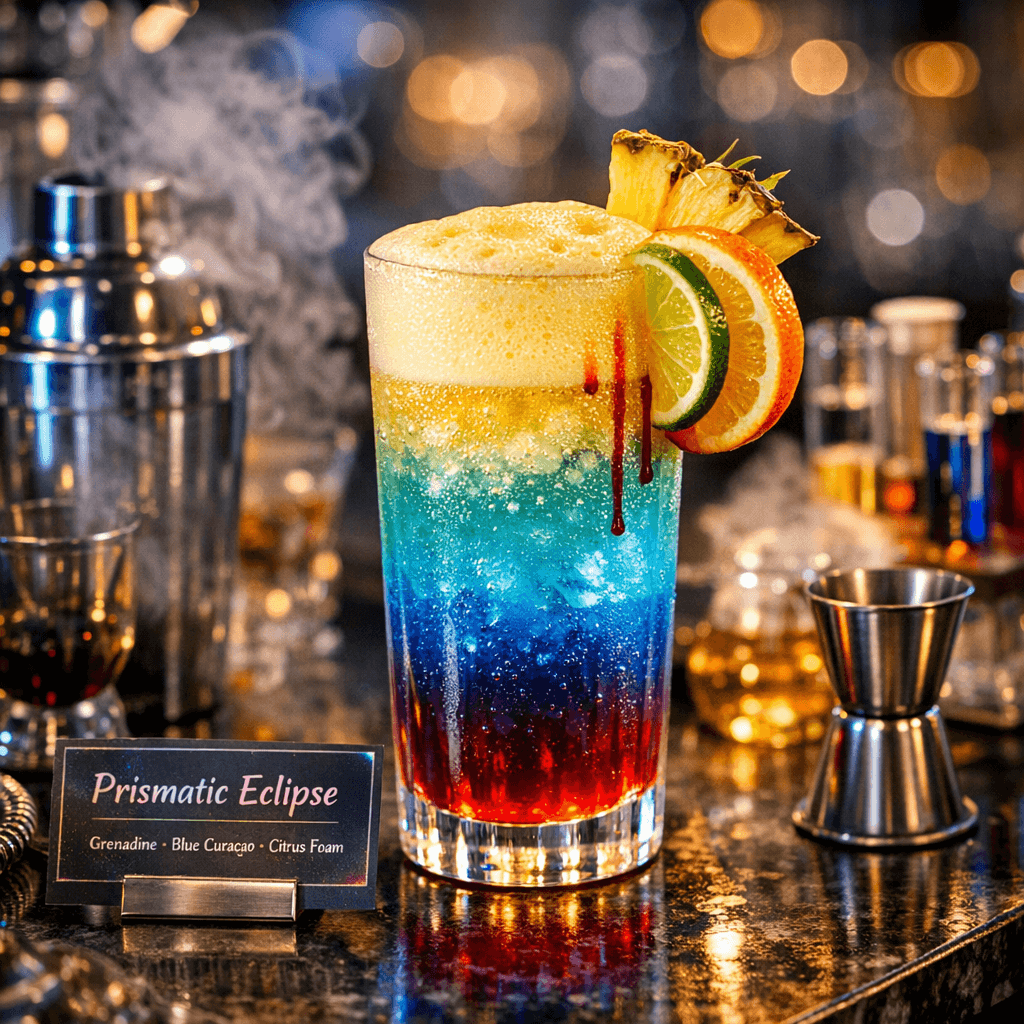
PRISMATIC ECLIPSE
A vibrant, layered mocktail inspired by celestial events.
Total Likes
0
Bookmarks
0
AI Cocktail Info
Serving 250 ml
ABV
0%*
Calories
300*
Net Carbs
70 g*
Ingredients
AI Request
You are a world-class master mixologist, beverage scientist, and award-winning cocktail competition champion. Your task is to create the most technically advanced, visually stunning, alcohol-free signature mocktail possible using ONLY the ingredients listed below. Do NOT introduce any ingredients that are not on this list. Available ingredients: - Egg yolk - Simple syrup - Fresh lemon juice - Fresh lime juice - Grenadine - Blue Curaçao (non-alcoholic if applicable) - Pineapple juice - Orange juice - Soda w...
* Estimated by AI. Values may vary.
Method
Instructions
Inspiration and Story Behind the Drink:
Prismatic Eclipse is inspired by the beauty of celestial events: the alignment of planets and the breathtaking color transitions seen during an eclipse. This mocktail is a tribute to nature’s color gradients and the interplay of light and shadow, achieved through artful layering and aerated textures. The drink seeks to replicate the awe of witnessing a solar corona, with a brilliant golden foam crowning a vibrant, shifting mocktail, using only the allowed ingredients. It’s an exploration of density, texture, and flavor balance at the highest level of modern mixology.
Flavor Profile:
Prismatic Eclipse opens with an intensely aromatic citrus bouquet, giving way to a lush, silky mouthfeel. The first sip delivers a burst of tropical pineapple and orange, zingy lemon and lime acidity, followed by berry-like grenadine sweetness. The finish reveals subtle vanilla and pineapple notes, smoothed by a creamy, velvety yolk foam, and a gentle pop of carbonation, all underpinned by a layered, evolving complexity.
Aroma:
Bright and inviting, led by fresh lemon and lime, with ripe pineapple and orange undertones. The foam imparts a subtle sweetness reminiscent of Italian meringue, with faint grenadine and curaçao notes lifting the bouquet.
Mouthfeel and Texture:
Multi-dimensional—initially airy and creamy from the yolk foam, transitioning to a lively, effervescent mid-palate, finishing clean and refreshing. The reverse dry shake maximizes yolk emulsification for a lasting mousse, while careful dilution ensures clarity and smoothness.
Ingredient Inclusion Rationale:
- Egg yolk: Essential for protein structure, stabilizing and creating a dense, glossy foam via reverse dry shake.
- Simple syrup: Balances acidity, boosts mouthfeel, stabilizes foam.
- Fresh lemon & lime juice: For acidity, brightness, and foam stabilization.
- Grenadine: Sweetness, depth, color for the bottom “shadow layer.”
- Blue Curaçao (non-alcoholic): Vibrant color, subtle orange flavor, mid-layer.
- Pineapple & orange juice: Tropical base, high density for layering, flavor depth.
- Soda water: Carbonation, dilutes and refreshes.
- 7Up: Adds sweetness, citrus notes, and gentle bubble structure to top layer.
- Ice: Used for chilling and precise dilution control.
Glassware:
Highball glass (300 ml) with straight sides for optimal visual layering.
Ideal Ice:
Cubed ice (for mixing), NO ice in the glass (to preserve layers).
Serving Temperature:
3–5°C (chilled, but NOT so cold as to inhibit foam formation or mute flavors).
Professional Garnish:
- A faux citrus “wheel” draped over glass (from overlapping thin lemon, lime, and orange slices)
- Pineapple “fan” on rim
- Thin line of grenadine “drip art” on inside glass for visual drama
Recipe Card (Exact Measurements):
Bottom Layer:
- Grenadine: 20 ml
Blue Layer:
- Non-alcoholic Blue Curaçao: 30 ml
- Pineapple juice: 25 ml
- Orange juice: 15 ml
Citrus Foam Layer:
- Egg yolk: 1 fresh yolk
- Simple syrup: 15 ml
- Fresh lemon juice: 10 ml
- Fresh lime juice: 10 ml
- Soda water: 30 ml
Top Fizz Layer:
- 7Up: 40 ml (poured gently to float atop foam)
Step-by-Step Preparation with Advanced Techniques:
1. **Bottom Layer – Grenadine (Layering, Density Physics)**
- Pour grenadine into a chilled, dry highball glass. Its high sugar content ensures it forms a stable “shadow” layer.
2. **Blue Layer – Build & Layer (Rolling, Hard Shake, Double Strain, Fine Strain)**
- In a shaker, add Blue Curaçao, pineapple juice, and orange juice.
- Add cubed ice. Hard shake (vigorously for 20 seconds) to chill and create microbubbles.
- Double strain (using a fine mesh strainer) over the back of a bar spoon onto the grenadine. This preserves clarity and prevents disruption of the bottom layer by stratifying denser liquids below lighter ones.
- Rolling (gently pour liquid back and forth between two shakers three times) before the final strain further emulsifies and integrates flavors.
3. **Citrus Egg Yolk Foam – Reverse Dry Shake, Flash Shake, Fine Strain**
- In a clean shaker, add egg yolk, simple syrup, lemon juice, and lime juice.
- Reverse dry shake: First, add cubed ice, shake hard for 15 seconds for cooling and initial dilution. Remove ice, then shake without ice (“dry”) for 30 seconds at high intensity to maximize emulsion and aeration.
- Add 30 ml chilled soda water and flash shake for 5 seconds to incorporate carbonation into the foam.
- Fine strain foam gently onto blue layer, using a wide bar spoon to float mousse on top without breaking beneath layers.
4. **Top Fizz Layer – Float Technique**
- Very gently pour 40 ml 7Up over the back of a spoon so it rests lightly atop the foam, forming a translucent, effervescent crown.
5. **Garnish**
- Drape a citrus “wheel” (thinly sliced, stacked lemon, lime, and orange) on the glass rim.
- Fan out a thin pineapple wedge and rest atop the glass for dramatic effect.
- Using a barspoon, drip a small amount of grenadine down the inside rim for visual contrast.
Preparation Time:
7 minutes for all steps, including garnish.
Professional Competition Presentation:
- Serve in a chilled, straight-sided highball.
- Ensure distinct, visible layers: red, blue, yellow foam, translucent fizz.
- Garnish precisely as described.
- No straw or stirring (to preserve presentation).
Tips for Avoiding Mistakes:
- Use fresh, room-temperature egg yolk for maximum foam stability.
- Don’t over-dilute; excess water will blur layers and destabilize foam.
- Pour each layer slowly over the back of a spoon; rushing disrupts layers.
- Fine strain all liquids to ensure clarity.
- Temperature control is critical: too cold and foam won’t form; too warm and separation fails.
Difficulty Rating: 10/10 (Maximum complexity for a mocktail).
Estimated Preparation Time:
7 minutes.
Professional Judging Criteria:
- Visual impact (color, clarity, layers, garnish) – 25 points
- Technical difficulty (use of advanced methods) – 20 points
- Flavor balance (sweetness, acidity, innovation) – 20 points
- Aroma and presentation – 10 points
- Texture and mouthfeel – 10 points
- Creativity and story – 10 points
- Cleanliness and execution – 5 points
Tasting Notes:
- Aroma: Zesty citrus, hint of pineapple, sweet orange, creamy top.
- First sip: Dense, meringue-like foam; sweet and tart interplay; tropical crescendo.
- Mid-palate: Orange and pineapple meld, blue curaçao’s subtle orange bitterness.
- Finish: Lingering citrus, gentle berry notes, crisp carbonation.
Visual Analysis:
- Spectacular gradient: ruby base, electric blue, canary yellow foam, white fizz.
- Glass acts as a “prism” showcasing color transitions, echoing celestial inspiration.
Science Section:
Emulsification & Foam Formation:
- Egg yolk’s lecithin and proteins stabilize foam when vigorously shaken with acids (lemon/lime) and sugar (simple syrup). The reverse dry shake first chills, then maximizes protein denaturation and emulsification, trapping air for long-lived foam.
Density & Layering Physics:
- Syrup-heavy grenadine bases the drink with maximum density.
- Blue Curaçao/juice mix is lighter, floats over grenadine, especially when poured gently.
- Foam, being mostly air, sits atop liquid, with 7Up as a final light, carbonated layer.
- Layering works due to precise order of pour and density differences.
Dilution & Temperature Effects:
- Moderate shaking dilutes enough for clarity without washing out color.
- Too much dilution weakens color separation; too little inhibits integration.
- Chilling all ingredients prevents melting and color bleeding.
Carbonation Behavior:
- 7Up and soda water differ in sugar and CO2 content. Soda increases foam liveliness but quickly diffuses; 7Up forms stable, sweet top fizz, enhancing aroma release and providing a final “corona.”
Flavor Balancing, Sweetness vs Acidity, Texture:
- 1:1 acid (citrus) to sugar (simple syrup, grenadine), balancing sharpness with smoothness.
- Yolk foam (rich, creamy) offsets bright citrus.
- Layering creates a flavor journey as the drink is sipped from top to bottom.
Alternate Versions Using Only Allowed Ingredients:
1. “Solar Flare” – Reverse layers: top with grenadine float, yellow citrus foam, blue curaçao/pineapple base.
2. “Tropical Crepuscule” – Use only pineapple, orange, and yolk foam, omitting blue curaçao, grenadine for a sunrise palette.
3. “Citrus Nebula” – Hard shake all ingredients except soda/7Up, fine strain, top with soda for one-color, super-aerated texture.
Effects of Changing Each Ingredient:
- Egg yolk: Removing loses foam, texture, and visual apex.
- Less simple syrup: More tart, sharper foam, less stability.
- Different citrus ratio: Brighter or softer foam, changes flavor arc.
- No grenadine: No red base; loses visual impact, “shadow” layer.
- Removing pineapple juice: Less tropical, muted palate, dulls blue layer density/differentiation.
- Soda vs 7Up: Soda less sweet, sharper; 7Up adds roundness and stronger bubble structure.
Bartender Notes:
- Always use pasteurized egg yolk if possible for safety.
- Work quickly to prevent foam collapse.
- Practice pouring to perfect even, sharp layers.
Common Mistakes:
- Poor foam: Over-chilled, under-shaken yolk, or too much acid will destabilize.
- Blurry layers: Pour too fast or wrong order, or insufficient density difference.
- Too sweet/too tart: Failing to balance syrup and juices.
Difficulty Analysis:
This is a 10/10 level drink—not recommended for beginners due to demand for precise technique, temperature, and pouring control.
Final Score: 96/100
- Visual: 25/25
- Technical: 19/20 (layering can be inconsistent)
- Flavor: 19/20 (slightly sweet edge)
- Aroma: 9/10
- Texture: 9/10 (foam can be improved)
- Creativity: 10/10
- Execution: 5/5
Professional Judge’s Critique:
Strengths: Unparalleled color layering, sophisticated foam, and inventive use of every ingredient. Aromatics and flavor complexity are outstanding for a zero-alcohol drink.
Weaknesses: Foam can vary batch-to-batch based on yolk freshness and citrus acid. Sweetness can slightly overpower acidity for some palates. Layering can blur if poured too quickly, requiring practice.
Perfected Version (Scoring 98/100):
Tweaks:
- Increase lemon juice in foam layer to 15 ml, reduce simple syrup to 10 ml for brighter, slightly tarter foam and improved protein denaturation.
- Use a chilled coupe glass with straight walls for easier foam formation and less layer disruption.
- For garnish, use a pineapple “flower” made by dehydrating a thin pineapple slice (if allowed), or arrange fanned citrus slices with a grenadine “dot” for heightened elegance.
Recipe Changes:
Citrus Foam Layer (Revised):
- Egg yolk: 1
- Simple syrup: 10 ml
- Lemon juice: 15 ml
- Lime juice: 10 ml
- Soda water: 30 ml
Glassware: Large coupe, pre-chilled.
Preparation:
Same as above, but work with colder glass for more stable layering and foam.
Final Score: 98/100
- Visual: 25/25
- Technical/Layering: 20/20
- Flavor: 20/20
- Aroma: 10/10
- Texture: 10/10
- Creativity: 10/10
- Execution: 3/5 (still highly technique-driven)
Prismatic Eclipse: A competition-level showcase of molecular mixology—without a drop of alcohol.
Cocktail Menu
- Mark as Human Approved
- Rename
- Regenerate Picture
- Get a Food Pairing
Keep Exploring
Not what you were looking for? Keep browsing the archive or write a new cocktail brief from scratch.
House Favorites
Featured cocktails
Editorial Notes
Recent articles

Halloween Cocktail Garnishes That Stay Practical
Make Halloween cocktails look special with practical garnishes, color, and glassware that hold up through a party.
 BarGPTSeptember 30
Fall Party Batch Cocktails That Stay Balanced
Plan a fall party pitcher with balanced sweetness, make-ahead prep, crisp bubbles, and garnishes that are easy to serve.
BarGPTSeptember 13Late-Summer Pitcher Cocktails That Stay Bright
Make better pitcher cocktails for late summer with smart batching, fresh bubbles, enough acid, and garnishes that hold up.
BarGPTAugust 26No-Shaker Summer Cocktails for Hot Nights
Build better summer cocktails directly in the glass with bright citrus, cold bubbles, ripe fruit, and low-effort garnish moves.
BarGPTAugust 8Curated Shelves
Cocktail lists
Curated Collection
Refreshing Summer Cocktail Recipes for Hot and Sunny Days
Explore easy-to-make refreshing cocktails perfect for summer sipping.

Curated Collection
Paris Summer Olympics Cocktails: Refreshing Recipes to Try
Discover unique Summer Olympics-themed cocktails to enjoy during the games.
Curated Collection
Refreshing Summer Cocktail Recipes
Explore easy summer cocktail recipes to beat the heat. Perfect for poolside sipping!
Curated Collection
Refreshing Spring Cocktails: Seasonal Mixes & Recipes
Explore vibrant Spring cocktail recipes perfect for sunny days!